


High-profile individuals in Atlanta face unique personal safety challenges that demand more than standard security measures. Whether you’re a business executive, celebrity, or simply value your privacy and safety, navigating the complexities of professional VIP protection can feel overwhelming. This comprehensive guide walks you through assessing your specific security needs, selecting the right protection team, managing security during events and travel, and verifying the effectiveness of your protection services to ensure peace of mind in every situation.
Table of Contents
- Key takeaways
- Assessing your VIP protection needs and prerequisites
- Selecting and briefing your VIP protection team
- Implementing and managing VIP protection during events and travel
- Reviewing and verifying VIP protection effectiveness
- Why choose K-Lock Security for your VIP protection needs
- FAQ
Key Takeaways
| Point | Details |
|---|---|
| Assess protection needs | Identify personal risk factors, event profiles, and travel patterns to craft a tailored VIP security plan. |
| Choose seasoned providers | Verify licensing, training, and track records to ensure capable, discreet protection. |
| Define team roles | Understand lead officer, close protection officers, and driver responsibilities to evaluate coverage. |
| Coordinate during events | Establish clear communication protocols and escalation steps to maintain safety without drawing attention. |
Assessing your VIP protection needs and prerequisites
Understanding your specific security risks is the first critical step in VIP protection planning. Your personal risk factors stem from multiple sources: public exposure through media appearances, business prominence, known threats from disgruntled parties, or simply a lifestyle that attracts unwanted attention. Each factor requires careful evaluation to build an effective protection strategy.
Your event profile significantly influences protection requirements. Private gatherings at your residence demand different security approaches than public appearances at charity galas or business conferences. High-profile engagements where media coverage is expected require specialized crowd management and discrete protection that doesn’t draw additional attention. Consider whether you need continuous protection or coverage for specific occasions.
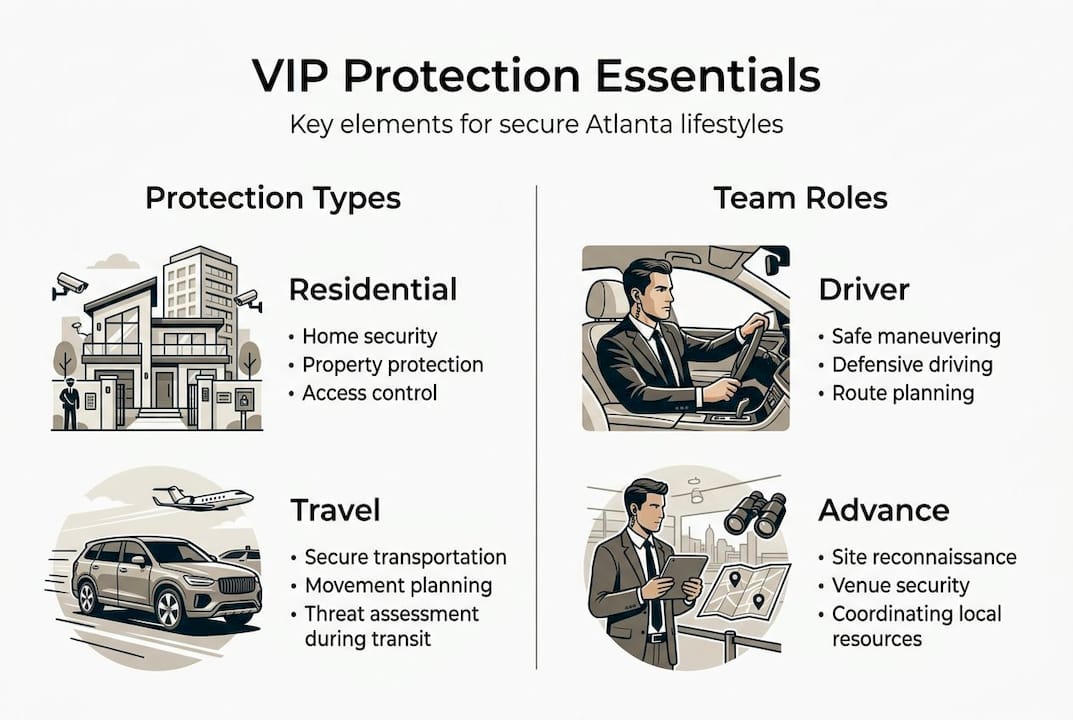
Determining your protection scope involves multiple dimensions. Personal protection focuses on your physical safety during daily activities. Residential security safeguards your home and family. Travel protection covers airport transfers, hotel stays, and movement between locations. Event security manages specific occasions where you’re particularly visible or vulnerable.
Legal and logistical requirements deserve attention before engaging any VIP protection services. Discuss state licensing requirements for armed personnel, insurance coverage, and liability considerations. Establish clear contracts outlining service scope, response protocols, and confidentiality agreements. Understanding these prerequisites prevents complications when you need protection most.
Communication preferences and emergency protocols form the foundation of effective protection. Specify how you want your team to interact with you, whether through discrete earpieces, text messages, or verbal updates. Define escalation procedures for different threat levels and establish code words for emergency situations that won’t alarm bystanders.
| Protection Scenario | Typical Service Level | Key Components |
|---|---|---|
| Daily personal protection | Medium to high | Close protection officer, secure transportation, residence monitoring |
| Public event appearance | High | Multiple team members, advance reconnaissance, crowd control coordination |
| International travel | Very high | Full security detail, route planning, local law enforcement liaison |
| Private residence security | Medium | Perimeter monitoring, access control, emergency response capability |
Pro Tip: Document any previous incidents or security concerns to share with your security team for tailored planning. Even seemingly minor events like persistent paparazzi, unusual mail, or uncomfortable encounters provide valuable intelligence for threat assessment.
Selecting and briefing your VIP protection team
Researching credentials separates qualified professionals from inadequate providers. Verify state licensing for security personnel, particularly for armed officers who require additional certifications. Examine training backgrounds, looking for experience in executive protection, tactical response, and crisis management. Ask about ongoing professional development and specialized skills like defensive driving or medical emergency response.
Professional teams combine armed and unarmed protection for comprehensive coverage. Understanding team roles helps you evaluate provider capabilities. The lead protection officer coordinates all security activities and serves as your primary contact. Close protection officers maintain immediate proximity, creating a physical barrier between you and potential threats. Specialized drivers handle secure transportation with defensive driving skills. Support personnel manage logistics, reconnaissance, and communications.
Providing a detailed briefing ensures your executive protection team operates effectively. Share your complete schedule including routine activities, upcoming events, and travel plans. Communicate personal preferences about protection visibility, whether you prefer discrete security or visible deterrence. Describe potential risk scenarios based on your threat assessment, including specific individuals or situations that concern you.
Establishing clear protocols prevents confusion during critical moments. Define confidentiality expectations regarding your movements, activities, and personal information. Outline conduct standards for how your team interacts with staff, guests, and the public. Specify emergency response procedures including medical emergencies, security breaches, and evacuation scenarios.
Interviewing and selecting your team requires systematic evaluation:
- Request detailed resumes highlighting relevant experience with high-profile clients
- Conduct face-to-face interviews to assess professionalism and communication skills
- Verify references from previous clients in similar situations
- Review insurance coverage and liability protections
- Evaluate their security assessment process and planning methodology
- Test their knowledge of Atlanta’s geography and local threat landscape
- Confirm 24/7 availability and backup personnel for continuous coverage
Key qualities to prioritize during selection:
- Discretion and ability to blend into various social settings
- Strong situational awareness and threat detection skills
- Excellent communication and interpersonal abilities
- Physical fitness and tactical proficiency
- Problem-solving skills under pressure
- Cultural sensitivity and adaptability
Pro Tip: Include familiarization meetings and walkthroughs of your usual locations for effective preparedness. Allow your team to visit your home, office, and frequently visited venues before protection begins. This advance reconnaissance identifies vulnerabilities, escape routes, and optimal positioning for security personnel.
Implementing and managing VIP protection during events and travel
Effective communication and situational awareness are key for protection success. Your security team maintains constant contact through encrypted radio systems or secure mobile applications. Real-time information sharing about your location, upcoming movements, and environmental changes allows rapid response to emerging situations. You should receive updates that keep you informed without creating anxiety or disrupting your activities.
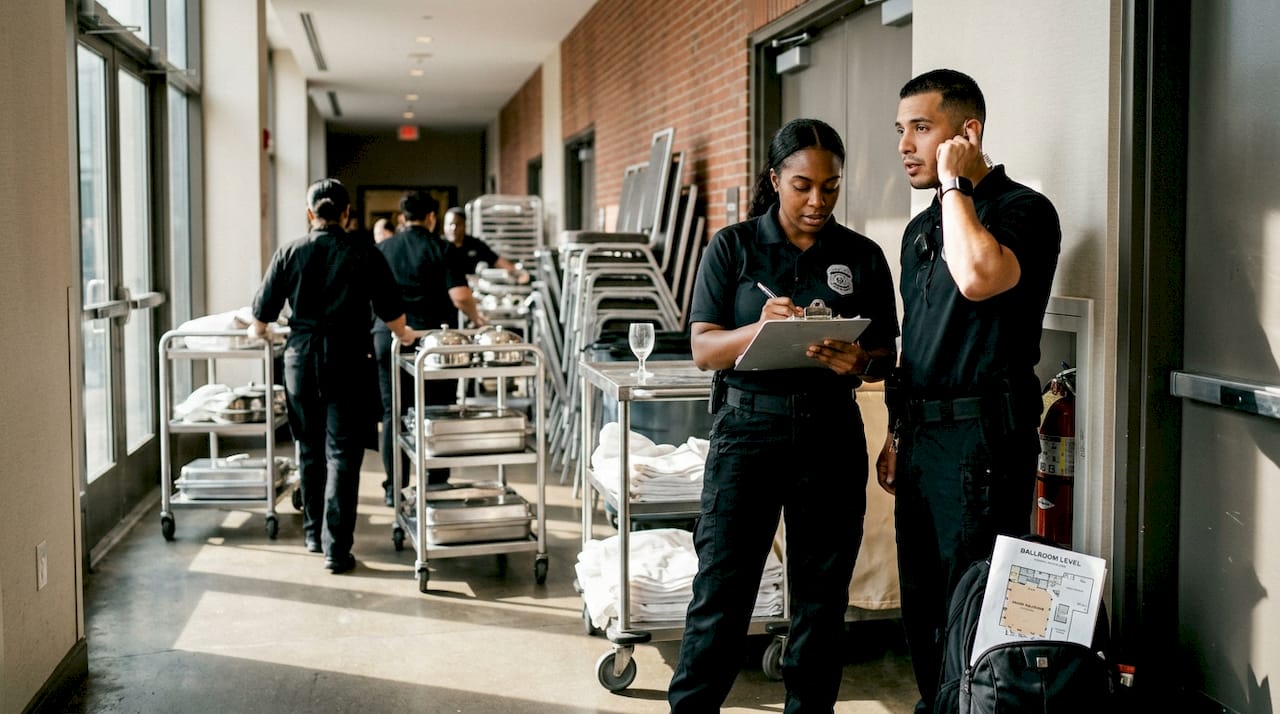
Security protocols for transportation and venues require meticulous planning. Your team conducts advance route reconnaissance, identifying primary and alternate paths while noting potential choke points, high-risk areas, and safe havens. Secure transportation involves more than armored vehicles. Drivers vary routes and timing to prevent pattern recognition. Vehicle inspections before each use ensure no tampering or tracking devices.
Venue assessments happen well before your arrival. Your team evaluates entry and exit points, identifies secure areas for emergencies, and coordinates with facility security. They map crowd flow patterns, locate potential threats like unsecured access points, and establish communication with local resources. This preparation transforms unfamiliar locations into controlled environments.
Managing crowd control and access points requires armed and unarmed security working in concert. Your team creates protective bubbles in crowded spaces, maintaining safe distances without appearing aggressive. They screen individuals approaching you, politely redirecting those who pose concerns. Access control at events involves credential verification, guest list management, and monitoring for unauthorized individuals.
Coordination with local law enforcement and venue security enhances your protection. Professional teams establish relationships with police departments, sharing relevant threat information and emergency contact protocols. They integrate with existing venue security rather than creating conflicts, clarifying roles and communication channels. This collaboration provides additional resources during incidents.
Common protective measures during travel and events:
- Advance security sweeps of all locations you’ll visit
- Controlled access points with identification verification
- Secure holding areas away from public view
- Predetermined evacuation routes and rally points
- Medical emergency response capabilities and nearby hospital identification
- Counter-surveillance detection to identify potential threats
- Discrete photography and video monitoring of your surroundings
Critical security practices:
- Maintain unpredictable schedules and routes
- Limit public disclosure of your itinerary
- Use secure communication channels for sensitive information
- Keep emergency contacts readily accessible
- Trust your security team’s threat assessments and recommendations
Never publicly disclose your security arrangements, team composition, or protection protocols. This information provides potential threats with intelligence to circumvent your defenses. Social media posts revealing security details, even seemingly harmless mentions, compromise your safety and should be strictly avoided.
Reviewing and verifying VIP protection effectiveness
Collecting feedback after protection activities identifies strengths and improvement opportunities. Evaluate your comfort level throughout protected events and daily activities. Assess team responsiveness to your requests and changing circumstances. Document any incidents, even minor ones, and how your team handled them. Your subjective experience matters as much as objective security metrics.
Regular reviews and feedback between client and security team enhance protection quality. Schedule debriefing sessions after significant events or monthly for ongoing protection. Discuss what worked well and what felt awkward or excessive. Your security provider should welcome constructive criticism and demonstrate willingness to adjust approaches based on your input.
| Protection Approach | Outcomes Achieved | Client Satisfaction | Areas for Improvement |
|---|---|---|---|
| High-visibility armed detail | Zero incidents, strong deterrent effect | Medium (felt too conspicuous) | Balance security with discretion |
| Discrete unarmed protection | Zero incidents, comfortable experience | High (seamless integration) | Enhance crowd management capabilities |
| Mixed armed/unarmed team | Successfully managed unexpected threat | Very high (felt safe and comfortable) | Improve advance route planning |
Establishing metrics for success provides objective evaluation standards. Incident prevention remains the primary measure, but zero incidents alone doesn’t confirm effectiveness. Track near-misses where threats were identified and neutralized before escalation. Monitor response times to your requests or emerging situations. Measure client confidence through regular surveys or informal check-ins.
Scheduling regular strategy updates keeps your protection current with evolving threats. Your risk profile changes as your public presence grows, business ventures develop, or personal circumstances shift. Quarterly security assessments review recent incidents industry-wide, update threat intelligence, and adjust protection protocols. Annual comprehensive reviews evaluate your entire security program against best practices.
Team training ensures skills remain sharp and current. Your provider should conduct regular tactical drills, scenario-based exercises, and skills refreshers. Verify they stay current with evolving security technologies, threat methodologies, and legal requirements. Ask about their professional development programs and how they incorporate lessons learned from incidents across their client base.
Key evaluation questions for your executive protection review:
- Did you feel safe and secure throughout protected activities?
- Was your team appropriately discrete or visible based on your preferences?
- How quickly did they respond to your requests or concerns?
- Were there any moments where you felt vulnerable or exposed?
- Did security measures interfere with your activities or relationships?
- What improvements would enhance your comfort and safety?
Pro Tip: Keep a security journal to document ongoing concerns and improvements. Note dates, locations, and specific situations where you felt particularly secure or vulnerable. Record interactions that seemed unusual or concerning. This documentation helps your team identify patterns and refine protection strategies over time.
Why choose K-Lock Security for your VIP protection needs
Navigating the complexities of personal security requires partners who understand the unique challenges facing high-profile individuals in Atlanta. K-Lock Security delivers tailored comprehensive protection services that adapt to your specific lifestyle and risk profile. Their teams combine expertise in both armed and unarmed security methods, providing flexible solutions that match your comfort level and threat environment.
What sets K-Lock Security LP apart is their commitment to discrete, professional service that integrates seamlessly into your life. Rather than one-size-fits-all approaches, they develop customizable plans based on thorough risk assessments and your personal preferences. Their fully licensed personnel undergo rigorous training in executive protection, ensuring you receive Atlanta’s highest standard of VIP security. Whether you need protection for a single high-profile event or ongoing personal security, K-Lock Executive Protections offers consultation services that help you understand your options and design the perfect security solution for your needs.
FAQ
What is included in professional VIP protection services?
Professional VIP protection encompasses comprehensive security solutions tailored to individual client needs. Services typically include thorough threat assessments to identify potential risks, physical security through trained personnel who maintain protective proximity, travel management covering route planning and secure transportation, and detailed emergency response plans for various scenarios. Teams often combine armed and unarmed officers based on threat levels and client preferences, ensuring appropriate force capability without unnecessary escalation. Coverage extends across personal bodyguard duties during daily activities, event security for public appearances, and residential protection for home and family safety.
How do I assess the right level of VIP protection for my needs?
Assessing appropriate protection levels starts with evaluating your public exposure, recent security incidents, and the profile of events you attend. Consider factors like media attention, business prominence, known adversaries, and lifestyle visibility that might attract unwanted interest. Consulting with professional security providers offers personalized risk evaluation based on their experience with similar clients and current threat intelligence. Generally, individuals with frequent public appearances, high-profile business roles, or those who have experienced previous security concerns should prioritize comprehensive protection that covers multiple aspects of their daily life rather than event-only coverage.
Can VIP protection teams handle last-minute changes or emergencies?
Experienced protection teams train extensively for adaptability and rapid response to unexpected situations. They maintain detailed contingency plans covering various scenarios from medical emergencies to security breaches, ensuring prepared responses regardless of circumstances. Professional teams use reliable communication tools that enable instant coordination and real-time information sharing when plans change suddenly. However, clients should keep providers informed of schedule modifications as early as possible, since advance notice allows better route planning, venue reconnaissance, and resource allocation that enhance overall security effectiveness during transitions.
What should I look for when hiring a VIP protection service?
Prioritize providers with proper state licensing, relevant certifications for armed personnel, and comprehensive insurance coverage protecting both you and their team members. Verify experience specifically with high-profile clientele by requesting references from previous clients in similar situations and industries. Evaluate their communication style during initial consultations, ensuring they listen carefully to your concerns and explain their approach clearly without using intimidation tactics or overselling services. Review contracts thoroughly for transparent pricing, clearly defined service scope, and reasonable termination clauses that protect your interests while ensuring quality service delivery.
